How disciplined youth leadership across 16 cities brought a sensitive food conversation into public view
Milk in India is widely associated with nourishment, culture and non-violence. It occupies a moral as well as nutritional space in the public imagination. At the same time, India is one of the world’s largest exporters of buffalo meat. These two realities are economically linked, yet they rarely appear in the same public conversation.
This separation creates a structural blind spot. When milk is framed exclusively as benevolent, questions about its systemic consequences become difficult to raise. The issue is not merely dietary preference. It concerns transparency within India’s food system and whether culturally embedded industries can be discussed critically without triggering social defensiveness.
If systemic realities remain confined to policy documents and closed-room conversations, meaningful public discourse cannot take root. The challenge, therefore, was how to introduce this tension into mainstream awareness in a way that invites reflection rather than resistance.
In two weeks:
• 175 young changemakers mobilised across 16 cities
• 73 press placements across 51 national and regional outlets
• 93% coverage consistently reflected the campaign’s core message
A Distributed Youth-Led Intervention Across 16 Cities
Food choices in India intersect with caste, religion, livelihood and regional identity. Advocacy that ignores these intersections risks backlash or misinterpretation.
India’s unique global position as the world’s largest producer of milk, alongside annual buffalo meat exports of over 1.3 million tonnes, is not a coincidence. These industries are structurally interdependent, yet socially disconnected in the public discourse. In such a context, centralised or confrontational messaging can quickly become counterproductive.
Strategic food systems work in the Global South requires culturally intuitive framing. Trust must precede critique. Conversations must begin from shared realities rather than ideological positions. Any intervention would therefore need to balance clarity with cultural sensitivity, and national coherence with local adaptability.
Precision at Scale: Media Penetration with Message Discipline
Against this backdrop, 175 young changemakers mobilised across 16 cities during Republic Week, continuing their outreach for a fortnight. On pavements, in public squares and at street corners, they installed visually striking standees that presented a simple juxtaposition: India’s celebrated milk production alongside its buffalo meat export figures.
The installations were designed not only to invite public reflection, but to generate structured media engagement. Their visual clarity and disciplined framing enabled the changemakers to brief journalists with consistency and confidence. As a result, the conversation moved quickly from street corners to national and regional news platforms, achieving the wider message visibility the campaign was designed to create.
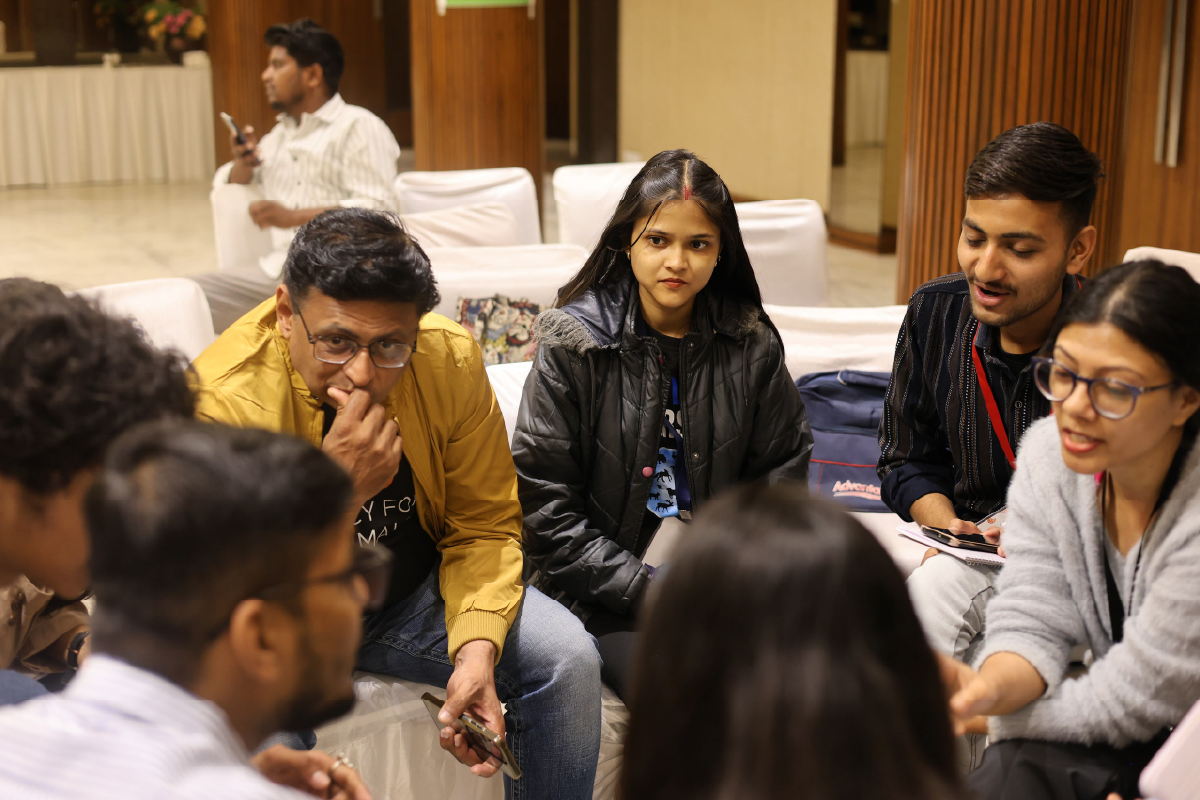
The structure of the campaign reflected its values. Our central coordination provided research support, media planning guidance, campaign strategy, and message framing. This foundation enabled disciplined execution across cities while ensuring message stability. Local youth collectives then led adaptation and mobilisation within their contexts. Their linguistic, cultural, and political intelligence ensured that messaging felt credible and relevant rather than imposed. This distributed leadership model strengthened the network itself, deepened local ownership, and enabled rapid mobilisation across 16 cities.
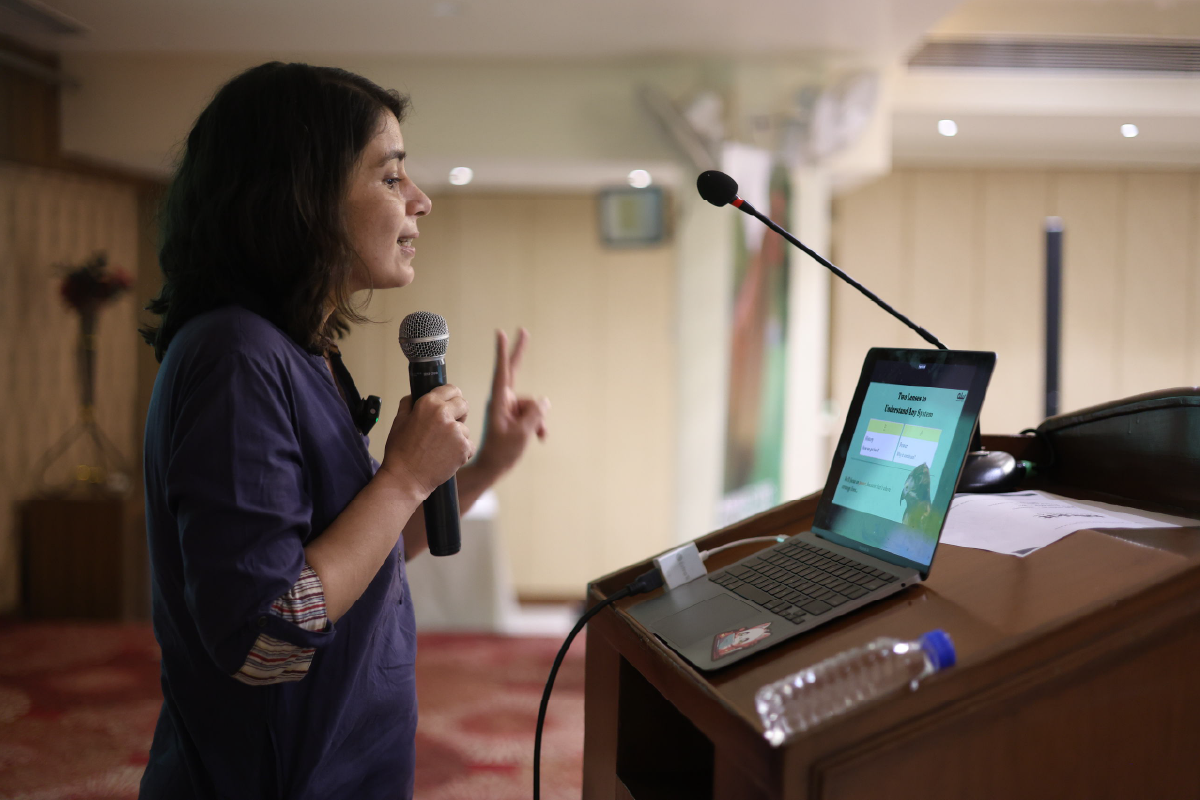
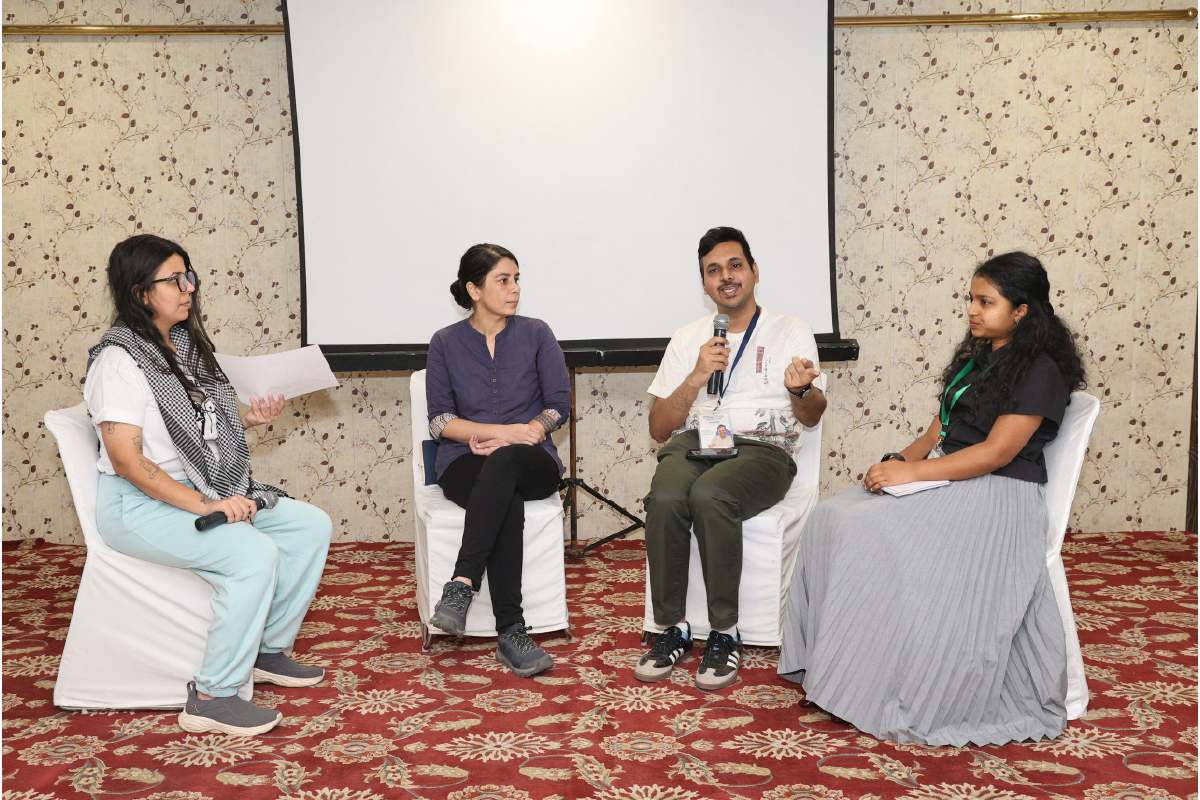
Our media training sessions were also integral to the intervention. Participants were supported in engaging journalists, maintaining message clarity and navigating difficult interviews. The focus was not only on immediate coverage, but on building long-term advocacy competence, which led to 93 percent of city leads reporting confidence in independently managing media outreach.
Precision at Scale: Media Penetration with Message Discipline
The results demonstrate both reach and precision.
In two weeks:
- 175 young changemakers mobilised across 16 cities
- 73 press placements secured across 51 national and regional outlets
- 93 percent of coverage reflected the campaign’s core message
- 96 percent of articles featured strong visuals from the installations
- 93 percent of city leads reported confidence in independently managing media outreach
- 78 percent of articles cited specific data on milk production and meat exports
- 24 percent of participants were first-time activists
Major outlets including The Times of India, Dainik Bhaskar and Anandabazar Patrika carried the story. Coverage extended beyond print into digital platforms and social sharing networks, amplifying the message across linguistic and regional boundaries.
Crucially, the message was not diluted as it travelled. Across 73 placements, message consistency remained intact. Data points were accurately represented and the systemic link between dairy production and meat export was clearly articulated. This level of alignment is rare in decentralised grassroots efforts. Interest from seven additional cities further indicated the campaign’s resonance and mass replicability.
The campaign produced several strategic insights about change-making in socio-politically sensitive contexts of India.
First, decentralised leadership can strengthen rather than weaken message discipline when supported by clear message framing. Local ownership enhanced contextual intelligence, allowing city leads to navigate social dynamics that a central body could not anticipate.
Second, grounding advocacy in verified data increases credibility. By anchoring the message in publicly available production and export figures, the campaign reduced the risk of dismissal as emotional or ideological.
Third, tone shapes outcomes. our media training consistently focused on steady facilitation and gentle entry points. This approach enabled conversations to unfold without escalating into polarised debate.
Finally, capacity building multiplies impact. Nearly a quarter of participants were first-time activists. The intervention therefore did more than generate media coverage. It strengthened a distributed network of young leaders capable of engaging complex food system issues with confidence.
This Was Not a Conclusion, But a Beginning
Systems change in food and agriculture requires more than policy reform. Policies rarely move ahead of public consent. When long-held beliefs about food remain unquestioned, institutional reform struggles to gain traction. Change therefore depends on expanding public imagination, allowing people to see familiar systems in a new light.
Through the combination of local leadership, clear data, and language that people relate to, this campaign shows how change can grow in a steady and practical way across India. With more internal capacity, this approach can expand to more cities and bring the conversation about food transparency into wider public discussions.
This was not the end of the work, but the start of it. The issue is now out in the open. If we continue engaging consistently, that visibility can slowly turn into lasting change.